
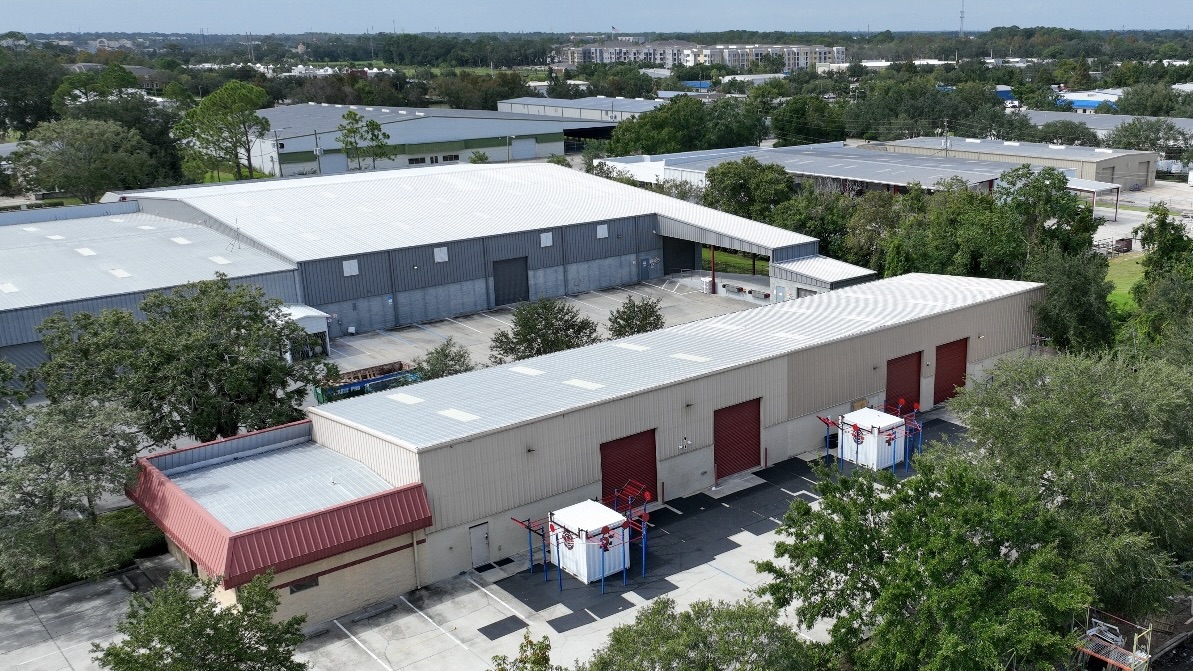
Commercial roof insurance claim assistance for building owners and property managers across Dayton, Montgomery County, Kettering, Beavercreek, Fairborn, Huber Heights, Vandalia, Miamisburg, Centerville, Springboro, Troy, Xenia, and the Miami Valley.
Filing a commercial roof claim in the Miami Valley usually starts the same way: a tenant reports a ceiling stain, a facilities manager notices granule loss in a downspout after a storm, or a routine inspection turns up hail bruising nobody had flagged. What happens next determines whether the claim reflects what actually happened to the roof or just the part of it that was easy to see from the parking lot. We're a commercial roofing contractor, not a public adjuster — we inspect the roof, document the damage in the format carriers expect, and meet your adjuster on the roof so the scope conversation starts from evidence instead of a guess.
A claim-ready roof inspection covers more than the obvious impact points. We walk the full field of the roof rather than only the area a tenant complained about, because storm and wind events rarely damage a roof uniformly. Documentation includes dated, geo-referenced photographs of membrane condition at drains, curbs, and perimeter flashing; test-square measurements where hail impact needs to be quantified; moisture-meter or infrared readings where saturated insulation is suspected under an intact membrane; and written notes correlating what we found with the storm event that likely caused it. That package is what turns a repair estimate into evidence a commercial property adjuster can act on.
Dayton's commercial building stock adds its own wrinkles to claim documentation. Buildings near Wright-Patterson AFB and the defense-contractor corridor in Beavercreek and Fairborn often carry facility compliance requirements layered on top of the standard insurance claim — a roof inspection report that satisfies a GSA lease condition or a contractor security protocol isn't automatically formatted the way a property carrier wants it, and we build documentation that can serve both purposes. Aerospace and logistics buildings along the I-70/I-75 corridor and the distribution parks near the airport tend to have large, low-slope membrane roofs where wind uplift and ponding water combine to create damage patterns that aren't visible from ground level. And downtown Dayton's adaptive-reuse buildings — former manufacturing and warehouse structures converted to office, retail, or mixed use around the Webster Station and Water Street districts — often have older roof assemblies, parapet conditions, and mechanical penetrations that need to be documented individually rather than assumed to match a standard commercial roof template.
Meeting the adjuster on the roof is where documentation either holds up or falls apart. We attend the roof walk with our own measurements and photographs in hand, point to the specific damage we've already logged, and walk the adjuster through the areas that a ground-level or aerial-only review would miss — perimeter and corner zones under high wind-uplift load, drain and scupper conditions affected by debris or ponding, and flashing transitions where membrane failure often starts. We don't negotiate the claim or represent you to the carrier; our role is to make sure the roof's actual condition is the thing being evaluated.
Complete-scope framing is where a lot of Dayton commercial claims fall short. A carrier's first estimate is often built from the visible, obviously-storm-related damage — a torn section of membrane, a dented piece of edge metal — without accounting for the functional damage that goes with it: saturated insulation that needs to come out even though the membrane above it looks intact, code-required upgrades that apply when a roof section is opened up for repair, or matching requirements when a partial repair would leave mismatched material on an otherwise uniform roof. Our estimates itemize these items individually with the reasoning behind each one, so the scope you and your adjuster are working from accounts for what the roof actually needs, beyond what's visible from the ground.
Denied and underpaid claims are common enough in this market that we treat them as a normal part of the process rather than an exception. A denial is frequently based on a partial roof review, a pre-existing-damage argument that doesn't hold up against dated documentation, or a scope that missed a component entirely. When that happens, we can go back to the roof, re-document the specific area in dispute, and produce a supplemental report that itemizes exactly what was missed and why it should be included. That report goes to you or your public adjuster to use in reconsideration — we provide the roof evidence; the claim negotiation itself stays with you and your insurance representative.
Repair versus full replacement is a decision that depends on the roof's age, the extent and distribution of the damage, and whether isolated repairs would leave a patchwork of mismatched material and warranty gaps across an otherwise uniform system. We document both scenarios with the same rigor — a damage map showing where impacts are concentrated versus distributed, material-condition notes on the roof's remaining service life, and photographs that support whichever scope decision the roof's actual condition points to.
We're your roofing contractor, not a public adjuster — we document and substantiate the roof damage so you and your adjuster work from an accurate, complete scope.
What to send before the roof walk
Send the roof address, leak or damage photos, roof age if known, access instructions, tenant limits, prior inspection reports, and your carrier's claim number if one has been issued. That lets the first visit focus on documenting the roof instead of chasing basic context.
Questions Owners Ask
Does insurance cover commercial roof replacement in Ohio?
Most commercial property policies cover roof damage from a defined peril such as wind, hail, or a sudden collapse, but whether that translates to a full replacement or a partial repair depends on your policy's replacement-cost versus actual-cash-value terms, and on whether the damage is scoped as a repairable area or a system-wide functional loss. A documented inspection is what establishes which category the damage falls into — we provide that documentation; the coverage determination itself is between you and your carrier.
What does the claim process look like for a Dayton commercial building?
After you report the loss to your carrier, an adjuster is assigned and a roof walk is scheduled. We meet the adjuster on the roof with our own measurements, photographs, and moisture readings in hand so the walk starts from documented evidence rather than a visual pass. The carrier then issues a scope and estimate, which you and your contractor can review against what was actually documented on the roof.
What if my claim comes back denied or underpaid?
A denial or a low estimate is often based on a partial roof review or a scope that missed a functional component — saturated insulation under an intact membrane, or code-required edge metal upgrades, are common examples. We can re-document the roof and produce a supplemental report itemizing what was missed, which you or your public adjuster can submit for reconsideration.
Should a commercial roof be repaired or replaced after storm damage?
That depends on the roof's age, the extent of the damage, and whether the damage is isolated or distributed across the roof field. Our documentation covers both scenarios with photographs, a damage map, and material-condition notes so the repair-versus-replace decision is based on the roof's actual condition rather than a single visible symptom.
Do you file or negotiate the insurance claim for us?
No. We're a roofing contractor, not a public adjuster. We inspect the roof, document the damage, and produce a full-scope estimate that you or your public adjuster can use when working with your carrier. Filing and negotiating the claim itself stays between you, your carrier, and your public adjuster if you retain one.