
Snow and ice roof damage insurance claim documentation for commercial buildings across Dayton, Montgomery County, Kettering, Beavercreek, Fairborn, Huber Heights, Vandalia, Miamisburg, Centerville, Springboro, Troy, Xenia, and the Miami Valley.
Dayton winters don't usually produce the single dramatic event that a hailstorm or a tornado does — they produce weeks of accumulation, thaw, and refreeze that work on a commercial roof gradually rather than all at once. That's precisely what makes snow and ice damage claims harder to document than storm damage claims: there's rarely one clear date to point to, and the damage often looks like ordinary wear until someone measures it against what the roof actually experienced over a hard winter.
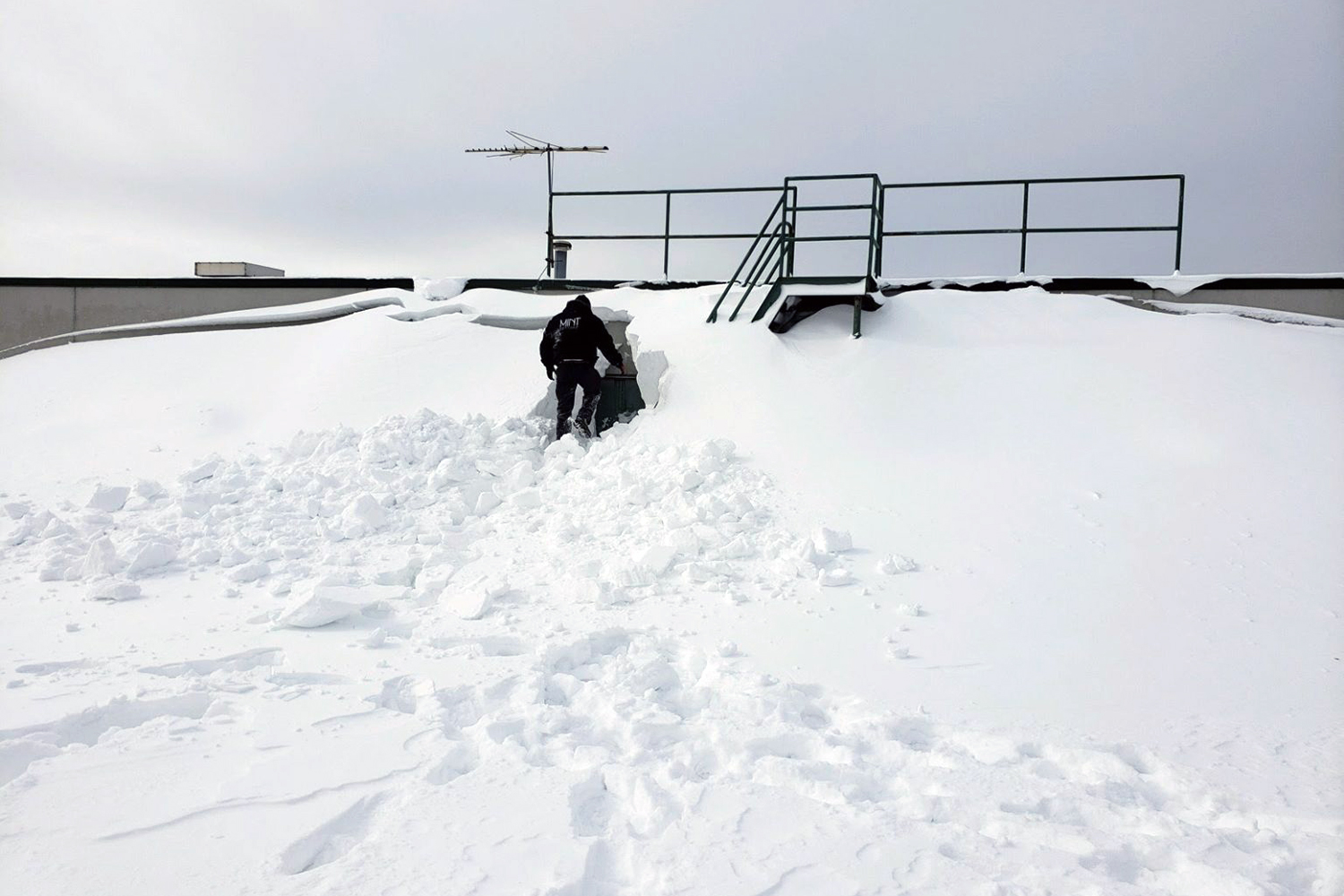
Snow load is the more straightforward half of the picture. A sustained accumulation, especially heavy wet snow followed by additional snowfall before the first layer compacts or melts, adds real dead-load weight across the roof deck. Older commercial buildings, roofs with parapet walls that create drift zones where wind-blown snow piles disproportionately deep, and roofs already carrying rooftop mechanical equipment are the ones we watch most closely for load-related stress. We inspect for deck deflection, membrane stress concentrated at structural bays, and ponding patterns that can indicate the deck has begun to sag under sustained weight rather than simply pooling from a drainage issue.
Ice dams are the other half, and they're a Miami Valley specialty because of how often the region cycles above and below freezing through a typical winter rather than staying consistently cold. Meltwater from a partially sun-warmed roof surface or from heat loss through the building envelope runs toward drains and low points, then refreezes overnight when temperatures drop back below freezing. Repeated over several freeze-thaw cycles, that ice builds up at drains, scuppers, and parapet-adjacent low points, blocking the path water needs to leave the roof. The water backs up behind the ice, finds a seam, flashing lap, or fastener penetration it wouldn't normally reach, and gets into the building — often well after the snow itself has melted, which is part of why owners sometimes don't connect a January leak to the actual cause until it's documented.
Our winter damage inspections check drain and scupper conditions specifically for ice blockage evidence, examine membrane and flashing at parapets and other low points where backed-up meltwater concentrates, and photograph ponding or refreeze patterns that support the timeline. Where interior water intrusion is suspected, we use moisture readings to establish whether water has already reached the insulation or deck, since wet insulation is a functional loss even in areas where the membrane surface itself looks intact.
Building type matters here too. Distribution and logistics buildings along the I-70/I-75 corridor often have very large roof areas with limited parapet height, which changes how snow drifts and where ice tends to concentrate compared to a smaller downtown building with taller parapets and more architectural detail to trap ice. Downtown Dayton's adaptive-reuse buildings — older converted warehouse and manufacturing stock near the Water Street and Webster Station districts — frequently have more complex roof geometry, multiple roof levels, and older drainage systems that are more prone to ice-related blockage than a newer single-level membrane roof. Facilities near Wright-Patterson AFB with dense rooftop equipment need ice documentation around each unit's curb and condensate drainage path, since ice buildup around equipment penetrations is a common and easily overlooked source of winter leaks.
Because winter roof damage develops over weeks rather than a single storm date, our documentation ties the observed condition to the season's weather pattern as a whole — recorded snowfall totals, temperature cycling data, and the timeline of when the leak or damage was first reported — rather than trying to pin the claim to one specific day. That approach holds up better with carriers who are used to seeing winter claims disputed on the basis of "gradual damage" or "lack of maintenance."
We're your roofing contractor, not a public adjuster — we document and substantiate the snow and ice damage so you and your adjuster work from an accurate, complete scope.
What to send before the roof walk
Send the roof address, when the leak or damage was first noticed, roof age if known, access instructions, tenant limits, and your carrier's claim number if one has been issued.
Questions Owners Ask
Is snow load or ice dam damage covered by commercial property insurance?
Snow load collapse and weight-of-ice damage are typically covered perils on commercial property policies, though carriers distinguish this from gradual water infiltration attributed to poor maintenance. Documentation showing the damage correlates with a specific accumulation or freeze-thaw event, rather than long-term neglect, is central to a successful claim.
How do you document ice dam damage on a flat commercial roof?
We inspect drain and scupper conditions for ice blockage, check membrane and flashing at parapets and low points where meltwater refreezes and backs up, and photograph ponding or ice buildup patterns. Interior moisture readings help confirm whether water intrusion has already reached the insulation or deck.
Can heavy snow load cause structural damage to a commercial roof?
Yes, particularly on older buildings, roofs with parapet-created drift zones, or roofs already carrying rooftop equipment loads. We check for deck deflection, membrane stress at structural bays, and evidence of ponding that indicates the deck has begun to sag under sustained snow weight.
Why did my roof leak weeks after the snow already melted?
Ice dams at drains and low points can back water up behind them for days or weeks through repeated freeze-thaw cycles before it finds a path into the building. The leak often shows up well after the snow event itself, which is why we tie our documentation to the season's freeze-thaw pattern rather than assuming a single storm date.
Do you handle the claim negotiation for snow and ice damage?
No. We're a roofing contractor, not a public adjuster. We document the damage, correlate it to the weather event, and provide a full-scope repair estimate. The claim itself is negotiated between you, your carrier, and a public adjuster if you retain one.