
Acrylic and Silicone Roof Coatings for commercial buildings across Dayton, Montgomery County, Kettering, Beavercreek, Fairborn, Huber Heights, Vandalia, Miamisburg, Centerville, Springboro, Troy, Xenia, and the Miami Valley.
Dayton's food and beverage market is built on strong neighborhood identity — the Oregon District's long-running restaurant and bar row, the South Park neighborhood's growing dining scene, and the rapid development of the Austin Landing and Beavercreek corridors in the suburbs that has imported nearly every major QSR and fast-casual chain concept to the Miami Valley. The University of Dayton and Wright-Patterson Air Force Base create distinct dining demand zones that keep food service buildings in this market running hard across multiple dayparts. Montgomery County's climate, shaped by the Great Miami River valley and its tendency to trap cold air in winter and humid air in summer, creates a commercial roofing environment that tests every exhaust flashing detail across all four seasons.
The Oregon District's restaurant buildings are among the oldest continuously occupied food service structures in the Dayton metro. East Fifth Street's Victorian-era commercial buildings have hosted restaurant tenants for decades, and the rooftop exhaust penetrations in those structures reflect every kitchen concept that's used the space. Unlike newer suburban buildings where exhaust penetrations were designed into the structure, Oregon District buildings have had penetrations cut through multiple roofing layers at various points, often without coordinated reflashing. A new tenant or building owner undertaking a renovation in that district should treat the exhaust penetration condition as the first line item in the roofing assessment, because addressing it after the kitchen equipment is already in is exponentially more disruptive.
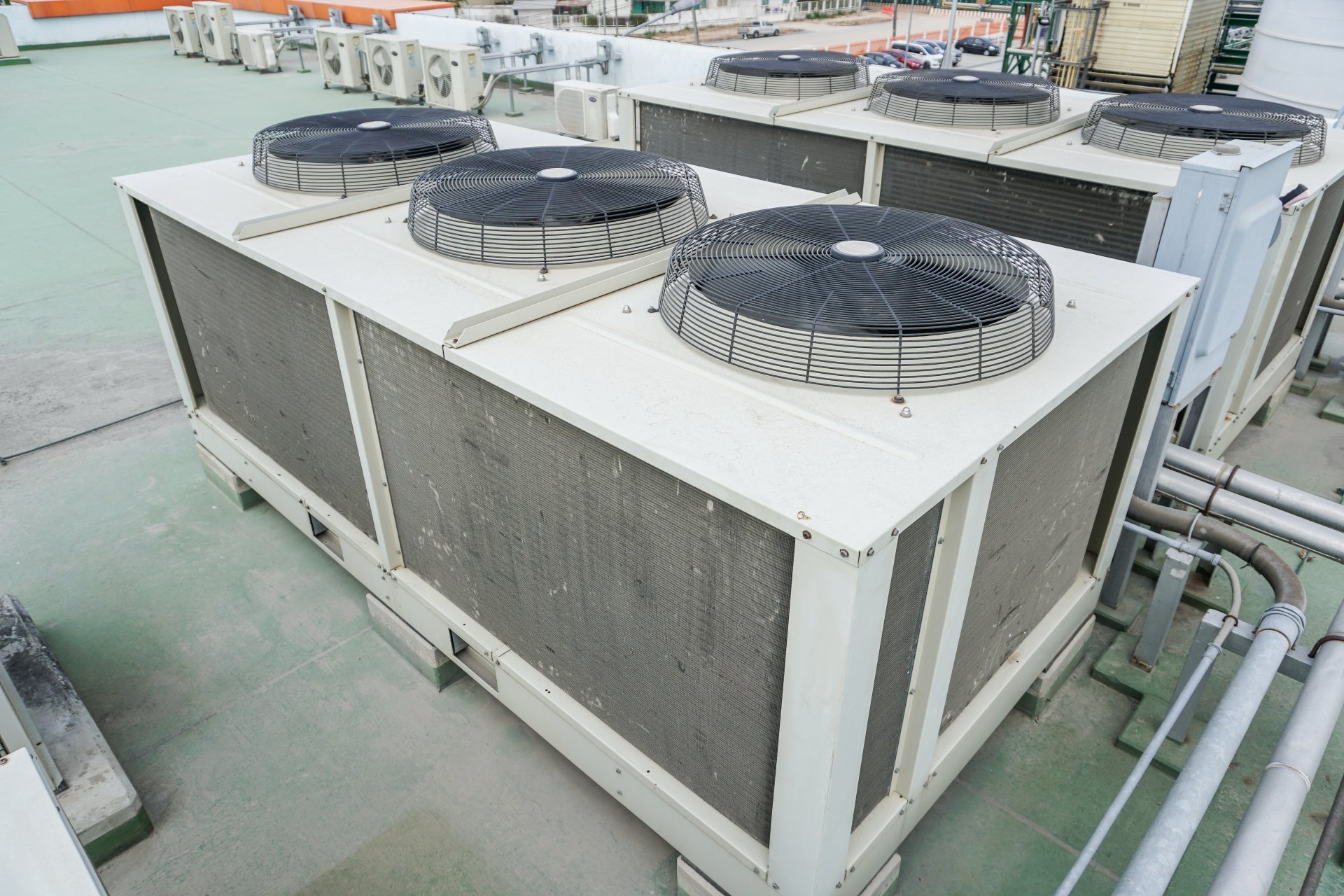
Grease exhaust from Dayton restaurant kitchens creates a predictable contamination pattern that follows the Miami Valley's seasonal weather. Hot summer days keep grease vapor airborne longer, broadening the deposition zone around exhaust terminations. The region's cold winters cause rapid condensation at the stack collar, depositing concentrated residue within a small radius and attacking collar flashings directly. Both seasons present distinct failure mechanisms, and a maintenance program that addresses only one — typically summer cleanup — misses the winter failure mode that produces the actual roof leak. Scheduling exhaust zone inspection and cleaning after both summer and after the last frost of winter provides complete protection against both failure patterns.
Walk-in cooler roofing details on Dayton food service buildings require careful vapor management because of the valley's seasonal humidity characteristics. Summer humidity above 65 percent drives moisture aggressively toward cold cooler surfaces, and the gap between outdoor temperature and cooler temperature is greatest in July and August when outdoor air hits 90°F. Any membrane termination gap at the cooler curb face allows warm moist air into the wall cavity, and in Montgomery County's humid summers, that gap can result in measurable insulation moisture in a single season. Vapor barrier specifications that treat the cooler curb as a high-risk zone — rather than a standard penetration detail — prevent that outcome.
Dayton's Beavercreek and Kettering suburban corridors carry a high density of strip center food service buildings from the 1990s and early 2000s that are now reaching end-of-life for their original membranes. Route 35's restaurant corridor and the Fairfield Commons-area outparcels are representative: buildings of 2,500 to 5,000 square feet running QSR or fast-casual concepts, with original EPDM or early TPO roofing that has been patched over multiple tenant changeovers. The economics of continued patching versus a full re-roof with modern 60-mil TPO tilt clearly toward replacement at this building age, particularly when a long-term tenant is in place and wants the certainty of a warranty-backed system for the duration of their lease.
Austin Landing's mixed-use development near I- represents the current generation of Dayton food service construction — newer buildings with modern roofing but without the tested track record of older installations. Franchise operators at Austin Landing should be aware that standard commercial roofing specifications on retail outparcel construction don't always include the food-service-specific details — grease containment curbs, PVC inserts at exhaust zones, vibration isolation at HVAC equipment curbs — that protect the membrane from food service-specific failure modes. Requesting those upgrades at buildout, when they're inexpensive to add, prevents the cost of reactive maintenance within the first five years.
Montgomery County health department inspections of commercial kitchens include exhaust system functionality review, and inspectors visiting Dayton restaurants in the Oregon District and along Woodman Drive are familiar with what a properly functioning exhaust termination looks like. Inspectors who observe grease accumulation at roof level visible from adjacent buildings, or who receive complaints about exhaust odors re-entering a building's fresh-air intake, have the authority to cite those conditions and require correction. Maintaining exhaust stack heights and clearances at or above code minimums, documented in annual roofing inspection records, provides an immediate response to any such notice.
Brewery and taproom operations have expanded significantly in the Dayton market, with the Five Rivers Food Hub in Dayton's urban core and breweries in Yellow Springs and Miamisburg adding large-scale ventilation equipment to a variety of building types. Brewery ventilation curbs for make-up air and brewing exhaust are typically larger and heavier than standard restaurant HVAC equipment, and the rooftop loading review that should precede any brewery conversion is often skipped in the excitement of a new concept launch. Deck structural assessment, curb attachment engineering, and vibration isolation specification should be completed before the brewery equipment is ordered, not after it arrives and can't be returned.
The right commercial roofing contractor for a Dayton food service building is one who can work fluently in both the historic Oregon District environment and the standard commercial construction of Beavercreek or Kettering. Those environments demand different skills, but the food service fundamentals — exhaust curb detailing, grease-resistant membrane specification, cooler curb vapor management, and maintenance scheduling around kitchen operating hours — are consistent across both. Contractors who can cite completed projects in both segments of the Dayton market and provide references from restaurant or brewery clients in each are demonstrating the range the work actually requires.
What to send before the roof walk
Send the roof address, leak photos, roof age if known, access instructions, tenant limits, prior reports, and the deadline driving the decision. That lets the first visit focus on the roof condition instead of chasing basic context.
Questions Owners Ask
Can this work happen while the building is occupied?
Often yes. The scope should cover access, safety, dry-in, staging, noise, interior protection, and the times when tenants or operations cannot be interrupted.
What changes the cost most?
Wet insulation, deck condition, edge metal, layer count, access, roof size, code triggers, weather timing, and the amount of repeated damage usually move the cost.
How is the condition documented?
The roof file should include photos, locations, material notes, observed defects, temporary repairs, remaining deficiencies, and recommended next steps.