
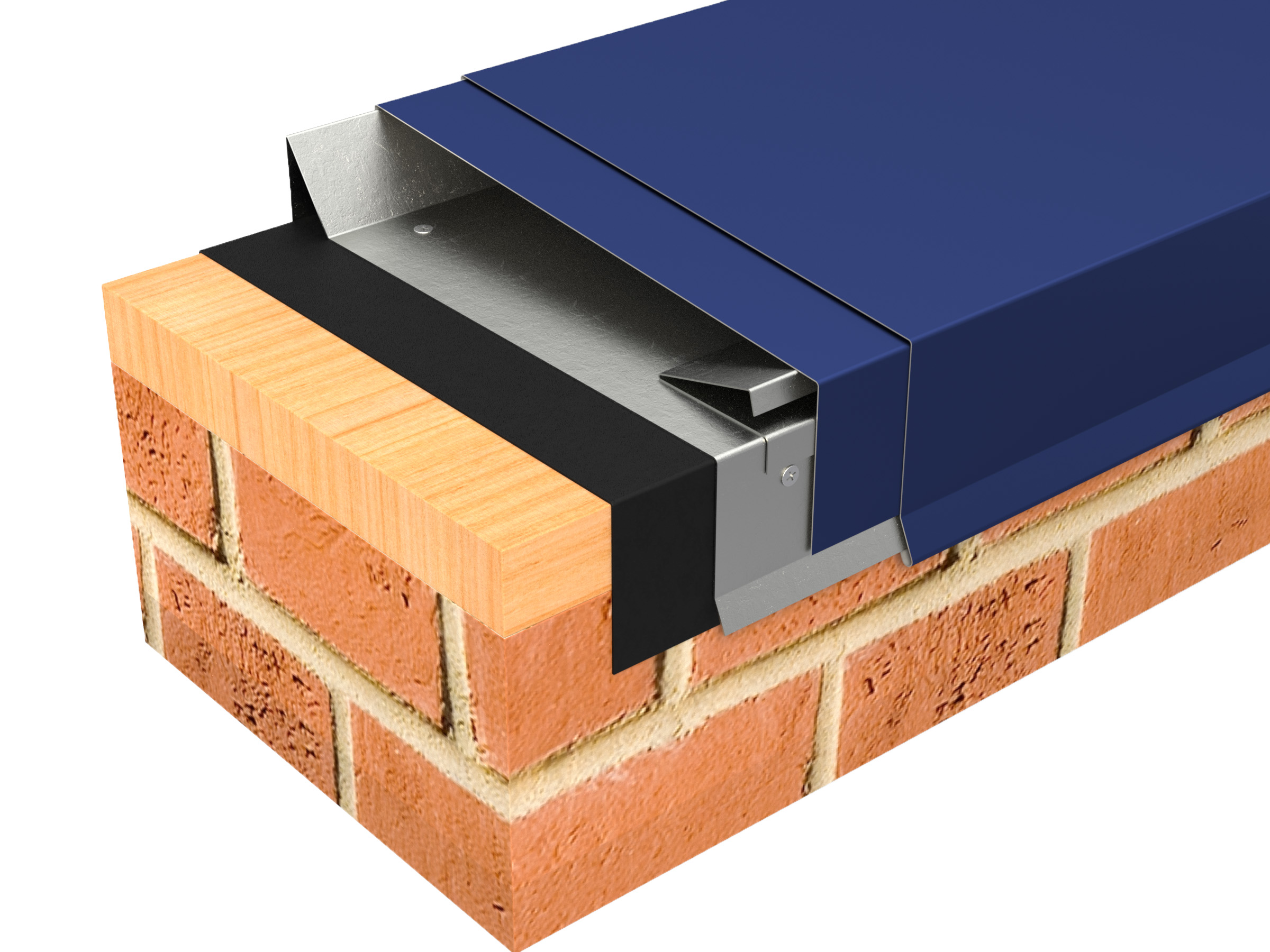
Edge Metal Coping and Gutters for commercial buildings across Dayton, Montgomery County, Kettering, Beavercreek, Fairborn, Huber Heights, Vandalia, Miamisburg, Centerville, Springboro, Troy, Xenia, and the Miami Valley.
The coping on Dayton's historic commercial parapet walls takes a sustained beating that most building owners don't recognize until the damage is already extensive. Oregon District and Webster Station buildings — masonry construction from the early twentieth century — have parapet walls that project above the roofline and are capped with stone, terra cotta, or metal coping installed decades ago. Dayton's freeze-thaw cycle attacks the joints and anchorage of this coping relentlessly: water infiltrates a joint in November, freezes and expands in January, pushes the joint open slightly, thaws and allows deeper water infiltration, then repeats. After several seasons of this cycle, coping begins to shift, uplift, or develop active water infiltration into the parapet wall assembly below.
Metal coping on flat commercial roofing is the more common material on Dayton's postwar commercial stock and faces the same freeze-thaw stress with different failure modes. Sheet metal coping sections are typically anchored with cleats and lapped at joints. When those joints open — due to thermal expansion cycling through Dayton's 100-degree annual temperature range or due to fastener pull-through in aging parapet walls — water works into the wall assembly and eventually into the building. Metal coping inspection should include checking cleat anchorage, joint sealant condition, and the integrity of the membrane termination where the roofing system meets the coping base. These termination points are among the most common active leak sources on commercial buildings in the Miami Valley.
Gutter sizing for Dayton's commercial properties requires an honest accounting of the convective storm pattern that dominates May through August. National weather data shows Dayton receiving over an inch of rain per hour during significant thunderstorm events, and the frequency of these events is high during peak storm season. Standard residential gutter sizing assumptions don't apply to commercial buildings with large roof drainage areas draining to relatively few gutter runs. Undersized gutters overflow during heavy events, directing water toward the building foundation and potentially allowing it to backflow under edge metal at the roof perimeter — a common cause of interior damage that gets misidentified as a roof leak when the actual entry is at the gutter/fascia interface.
Ice backup is a gutter and drainage problem specific to Dayton's winter conditions that doesn't get the attention it deserves in commercial roofing maintenance planning. When snow on a commercial roof melts during a mid-winter warm spell and then refreezes as temperatures drop, ice can form at the gutter line and in interior drains simultaneously. A gutter filled with ice cannot carry meltwater during the next warm cycle — that water backs up under the roofing membrane at the perimeter, saturating the edge insulation and eventually finding its way into the building interior. January and February are the months when Dayton commercial roofing contractors receive calls about leaks at exterior walls that are actually ice backup events at the gutter line.
Downspout sizing and routing are often-overlooked components in the commercial building drainage system. On Dayton commercial buildings with limited site perimeter, downspouts frequently route through the building structure or along exterior walls in ways that were logical in the original construction but have been modified or compromised over the building's life. Disconnected downspout extensions that deposit water six inches from the foundation wall, underground drainage connections that have collapsed or separated, and downspouts that terminate above frost level and ice-plug in January are all common findings during edge metal and gutter assessments across the Dayton commercial market.
Edge metal termination and drip edge details are the transition between the roofing membrane and the building's vertical drainage system, and they are the most frequently compromised component in Dayton commercial roofing assemblies. SMACNA standards for metal fabrication and installation specify minimum dimensions, material gauges, and joint details that are regularly violated in lower-cost roofing work. Undersized drip edge profiles that allow wind-driven rain to bypass the metal and wet the fascia board beneath, sealant-joint-only terminations on edge metal that have no mechanical attachment, and field-bent edge metal that doesn't meet the profile necessary to direct water cleanly away from the wall — all of these conditions are routinely found during Dayton commercial roof assessments.
Historic buildings in downtown Dayton present coping restoration challenges that go beyond standard commercial replacement. When stone coping has failed on an Oregon District building or a Webster Station mixed-use property, the replacement options range from in-kind stone restoration (expensive and time-intensive) to metal coping fabricated to match the original profile (more practical) to modern pre-formed metal coping that changes the building's appearance at the parapet line. In some cases, historic preservation guidance or local landmark designation constrains these choices. Getting the right answer for a specific building requires someone who understands both the technical performance requirements and the preservation context of Dayton's historic commercial corridors.
Post-installation maintenance for edge metal, coping, and gutters is often simpler and less expensive than the work needed when these systems are ignored. Annual gutter cleaning — removing debris accumulation before the leaf-fall season and again after spring tree activity — prevents the progressive drain restriction that leads to overflow events. Annual inspection of metal coping joints and membrane terminations, with sealant refresh on any cracked or open joints before the freeze season begins, stops infiltration before it compromises the wall assembly. Building owners managing properties along Dayton's commercial corridors who budget for this annual maintenance typically avoid the more expensive parapet wall remediation that results from years of undetected water infiltration.
What to send before the roof walk
Send the roof address, leak photos, roof age if known, access instructions, tenant limits, prior reports, and the deadline driving the decision. That lets the first visit focus on the roof condition instead of chasing basic context.
Questions Owners Ask
How do I know if my coping is causing wall damage versus a roof membrane leak?
Coping failures typically produce water damage at the interior face of exterior walls, particularly at the top of wall assemblies and in areas directly below parapet joints. Roof membrane leaks tend to produce ceiling staining in the field of the building. If interior water damage is showing up at or near exterior walls rather than below the field of the roof, coping and edge metal should be the first area of investigation. A thorough exterior inspection of the parapet line and masonry joints below the coping will often reveal visual evidence of the infiltration pathway.
What gutter material holds up best in Dayton's climate?
Galvanized steel and aluminum are both widely used on Dayton commercial buildings. Heavy-gauge aluminum (0.032" or heavier for commercial applications) is the most common current specification — it doesn't rust, is relatively lightweight, and handles thermal movement reasonably well. Galvanized steel gutter is heavier and more resistant to physical impact, which matters on buildings where ladder access or equipment contact is likely. Copper is occasionally used on historic buildings where long-term aesthetics are a priority. Avoid lightweight residential-grade aluminum on commercial applications — the gauge is insufficient for the water volumes and physical loads on commercial buildings.
Can ice backup in gutters cause structural damage to my building?
Yes — ice accumulation at the gutter line adds significant point load to gutter supports and can pull the gutter away from the fascia board if the weight exceeds the anchor capacity. More commonly, the damage is to the building envelope: water backed up behind ice enters wall assemblies and creates moisture damage in insulation, sheathing, and interior finishes. On Dayton commercial buildings where the gutter is attached at the edge of the roof membrane, ice backup events can also undermine the membrane termination and allow water entry under the roofing system itself.
How are coping sections secured on a commercial roof?
Standard commercial metal coping is anchored with continuous metal cleats fastened to the parapet wall, with the coping cap snapping or hooking onto the cleat. This allows thermal movement while maintaining anchorage. Joints between sections are lapped and sealed, typically with a cover plate or z-bar splice. The coping base is also typically adhered or counterflashed at its roof-side edge where it meets the roofing membrane. Failure of any of these components — cleat pull-out from aging parapet walls, failed joint sealant, or open membrane termination — creates a water infiltration pathway.
How much does commercial gutter replacement cost in Dayton?
Commercial gutter replacement pricing depends on linear footage, material specification, downspout count and routing complexity, and any fascia repair required as part of the project. As a general range, commercial gutter replacement in the Dayton market runs $25 to $60 per linear foot installed, including downspouts at standard intervals. Historic buildings requiring custom profile fabrication, buildings with difficult access, or projects requiring masonry repair at the gutter attachment line will run higher. Getting multiple quotes with clearly specified material gauge and installation method gives you a reliable comparison basis.