
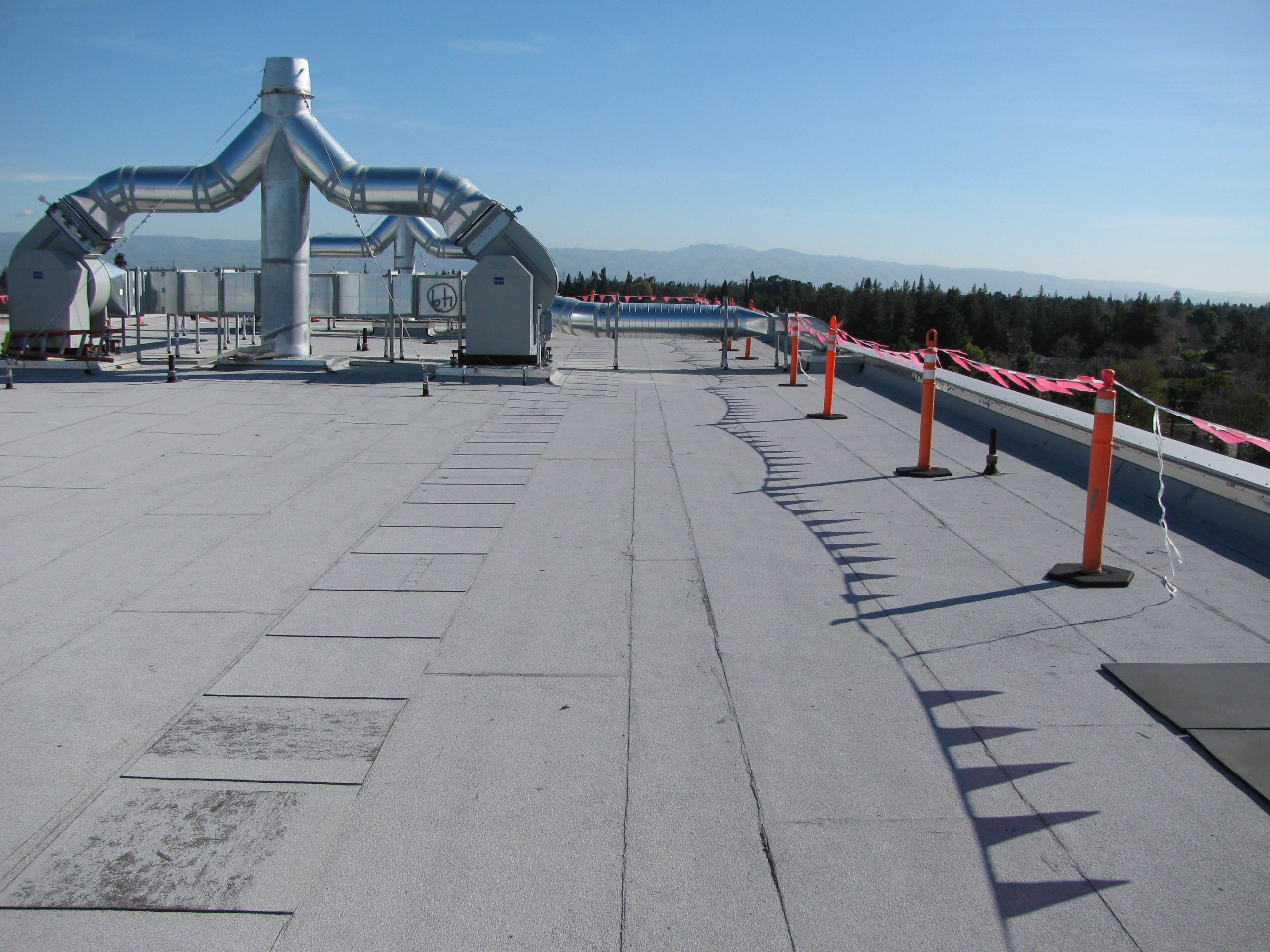
Occupied Building Re-Roofing for commercial buildings across Dayton, Montgomery County, Kettering, Beavercreek, Fairborn, Huber Heights, Vandalia, Miamisburg, Centerville, Springboro, Troy, Xenia, and the Miami Valley.
Occupied Building Re-Roofing in Dayton, OH requires a phased work plan approved by the building owner before mobilization. Each phase defines the open roof area for that work day, the temporary protection strategy if weather interrupts the schedule, the access route that avoids tenant entrances and parking areas, and the daily dry-in standard that must be met before the crew leaves the site. For occupied building re-roofing in Dayton, Montgomery County, Kettering, Beavercreek, Fairborn, Huber Heights, Vandalia, Miamisburg, Centerville, Springboro, Troy, Xenia, and the Miami Valley, the dry-in requirement is non-negotiable: no open membrane section stays unprotected overnight.
OSHA 1926.502 fall protection requirements apply to every occupied building re-roofing project. Workers on low-slope roofs more than six feet above the lower level must be protected by guardrails, safety nets, or a personal fall arrest system. For occupied building re-roofing in Dayton, the fall protection plan also has to account for the people below: tenant notifications, sidewalk protection at eave edges, and daily housekeeping to prevent debris from becoming a pedestrian hazard are all part of the scope before a nail gun fires.
Material staging for occupied building re-roofing requires site-specific coordination. Tear-off material cannot block tenant loading docks, fire exits, accessible parking spaces, or HVAC fresh air intakes. For occupied building re-roofing in Dayton, Montgomery County, Kettering, Beavercreek, Fairborn, Huber Heights, Vandalia, Miamisburg, Centerville, Springboro, Troy, Xenia, and the Miami Valley, we review the site plan before scheduling delivery, identify crane or forklift staging windows that minimize operational disruption, and establish a debris disposal sequence that keeps dumpsters from occupying tenant or customer spaces for more than one work day.
What to send before the roof walk
Send the roof address, leak photos, roof age if known, access instructions, tenant limits, prior reports, and the deadline driving the decision. That lets the first visit focus on the roof condition instead of chasing basic context.
Questions Owners Ask
How is the phasing plan developed for occupied building re-roofing?
We review tenant operations, loading dock schedules, access routes, forecast windows, and daily dry-in capacity to build a phase sequence that keeps the building protected and operations running.
What does OSHA require for fall protection on occupied building re-roofing projects?
Workers within six feet of an unprotected roof edge must be protected by guardrails, safety nets, or a personal fall arrest system. The fall protection plan is submitted before work begins.
How are tenant communications handled during occupied building re-roofing?
We provide the building owner with a daily work summary, notify affected tenants in advance of work near their spaces, and designate a single point of contact for questions during the project.
What happens if weather delays an occupied building re-roofing phase?
Pre-staged contingency dry-in materials are deployed to protect any open section. The facility contact is notified, and the phase plan is adjusted to keep the building protected while rescheduling lost time.