
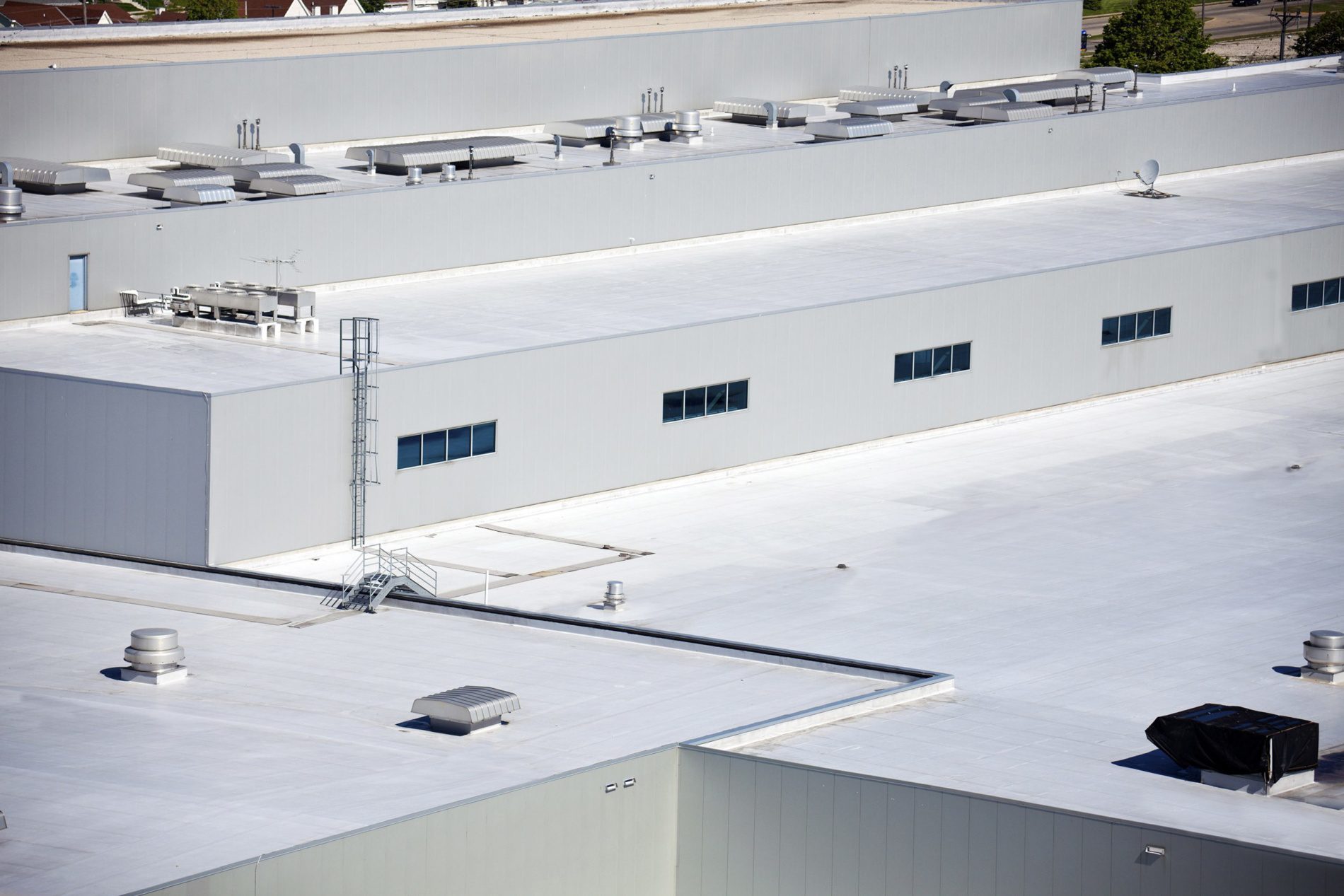
Acrylic and Silicone Roof Coatings for commercial buildings across Dayton, Montgomery County, Kettering, Beavercreek, Fairborn, Huber Heights, Vandalia, Miamisburg, Centerville, Springboro, Troy, Xenia, and the Miami Valley.
Dayton's manufacturing identity runs deep — this is the city that gave the world the airplane, and its industrial base has never stopped evolving. Today, facilities like Emerson Electric's manufacturing operations and the many precision machining and aerospace supply-chain companies clustered around Wright-Patterson Air Force Base represent a manufacturing sector where roofing performance directly affects production continuity and regulatory compliance. Commercial roofing for Dayton manufacturing plants requires an understanding of the specific demands that heavy equipment, chemical processes, and Ohio's variable climate place on roofing systems.
Process equipment density on Dayton manufacturing roofs ranges from moderate to extreme depending on the facility type. Casting and machining operations use large ventilation systems to exhaust heat and metalworking fluids; chemical manufacturing operations may have pressurized stack discharges; electronics assembly facilities require precision climate control equipment installed on rooftop platforms. Each equipment type presents a different set of flashing and penetration challenges that must be addressed with materials appropriate for the specific chemical and thermal environment.
Metalworking fluid mist is a particular concern at Dayton's machining facilities. Coolant vapor and fine metal particulates can exit through roof-mounted exhaust systems and deposit on adjacent membrane surfaces, creating a chemically aggressive film that accelerates degradation of standard roofing materials. We specify membrane systems in exhaust discharge zones that are rated for oil and metalworking fluid exposure, and we include annual cleaning of those zones in our preventive maintenance recommendations.
Vibration from large CNC lathes, milling centers, and stamping presses is transmitted through building structures to the roof deck in Dayton's machining and fabrication plants. This low-frequency vibration fatigues seams and flashings over time, particularly at equipment curb bases where rigid connections meet flexible membrane systems. Our vibration-aware flashing details use reinforced stripping and flexible collars at high-vibration locations to absorb movement without cracking.
Skylights over production floors in Dayton's older manufacturing buildings — many dating to mid-20th century construction — are a common source of water intrusion. Wire glass and polycarbonate units in aging aluminum frames lose their gasket compression and allow water to track along the frame interior before appearing at ceiling level, making leak source identification difficult. We assess skylight condition during every manufacturing roof survey and provide curb replacement options that do not require full production shutdown.
Ohio's freeze-thaw cycle adds a dimension to manufacturing roof maintenance that Sunbelt contractors may underestimate. Ice dams can form at low-slope roof edges in Dayton winters, and standing water from inadequate drainage freezes and expands, working open lap seams and flashing terminations that might otherwise remain intact. We specify internal drain configurations on re-roofing projects to minimize ponding in freeze-prone zones, and we recommend heated drain inserts at primary drain locations for critical facilities.
Drain contamination on Dayton manufacturing roofs can involve metalworking fluids, cutting oils, or process chemicals that are subject to EPA and Ohio EPA stormwater permit requirements. We coordinate drain replacement or retrofit work to support your facility's permit compliance, and we document drain capacities and flow paths as part of the project close-out package.
Production schedule coordination for Dayton manufacturing plants typically centers on second and third shift availability and weekend windows. We offer after-hours and weekend crews for facilities where daytime production cannot be interrupted, and we maintain direct communication with your maintenance supervisor throughout the project to accommodate any schedule changes driven by production demands.
Dayton's manufacturing sector deserves a roofing partner who understands the intersection of industrial process requirements and Ohio's demanding climate. Our teams bring both the technical specifications and the scheduling flexibility that Dayton manufacturers need to keep production moving while protecting their facilities.
What to send before the roof walk
Send the roof address, leak photos, roof age if known, access instructions, tenant limits, prior reports, and the deadline driving the decision. That lets the first visit focus on the roof condition instead of chasing basic context.
Questions Owners Ask
Can this work happen while the building is occupied?
Often yes. The scope should cover access, safety, dry-in, staging, noise, interior protection, and the times when tenants or operations cannot be interrupted.
What changes the cost most?
Wet insulation, deck condition, edge metal, layer count, access, roof size, code triggers, weather timing, and the amount of repeated damage usually move the cost.
How is the condition documented?
The roof file should include photos, locations, material notes, observed defects, temporary repairs, remaining deficiencies, and recommended next steps.