
Acrylic and Silicone Roof Coatings for commercial buildings across Dayton, Montgomery County, Kettering, Beavercreek, Fairborn, Huber Heights, Vandalia, Miamisburg, Centerville, Springboro, Troy, Xenia, and the Miami Valley.
The Reynolds and Reynolds corporate headquarters campus in Dayton, a major employer in the Miami Valley, represents the kind of multi-building corporate office complex where roofing decisions affect not just building performance but the company's operational continuity and the physical image it presents to business partners and employees every day. Dayton's commercial office market includes a mix of downtown Class B buildings that have been repurposed and renovated over decades and newer suburban campus developments in Miamisburg, Beavercreek, and the Austin Landing corridor, and each presents distinct roofing challenges that require building-type-specific expertise from the contractor.
Occupied-building protocols on a Dayton corporate campus require careful planning given Ohio's seasons. A roof replacement scheduled for summer months in Dayton must account for the business interruption implications of working over occupied floors, and the roofing contractor must manage noise, odor, and vibration during business hours. Hot-air welding equipment used for TPO installation produces heat that can be felt through lightweight ceiling assemblies on floors directly below the work area, and the project sequencing must account for this by limiting overhead work to areas with either no occupied space below or by coordinating with building management to schedule sensitive floor areas during periods when those spaces are unoccupied. Dayton's strong corporate culture means that employee experience during a roof replacement is a genuine management concern, not an afterthought.
Aesthetics and green roof considerations for Dayton office buildings are shaped by the city's ambition to maintain and grow its commercial real estate competitiveness despite the population and employment headwinds the metro has faced in recent decades. Building owners in the Dayton CBD and the Oregon District have made deliberate investments in building appearance as a retention and attraction strategy for corporate tenants, and a visibly deteriorating or poorly maintained rooftop is inconsistent with that strategy. Cool roof membranes in white or light gray are appropriate for visible Dayton rooftops, and several suburban Dayton office campuses have incorporated small green roof sections on canopy structures and podium levels where they are visible from interior office spaces.
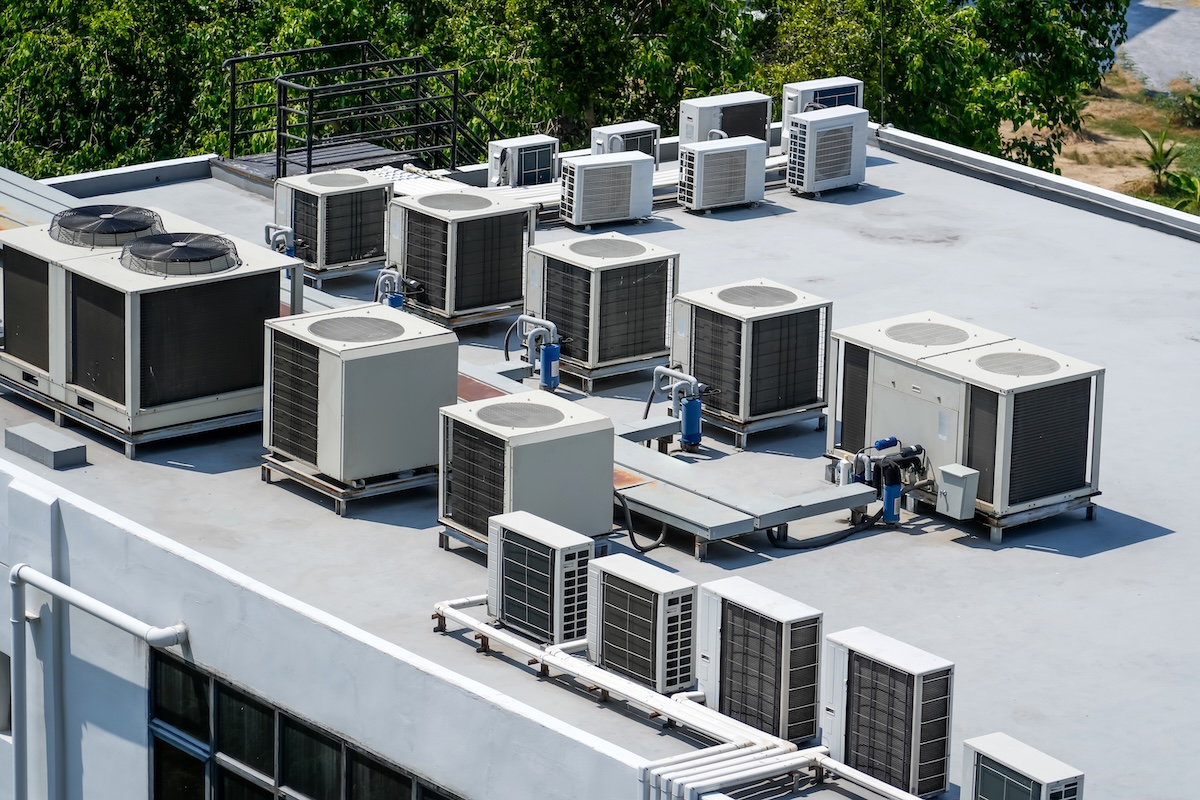
Multi-RTU coordination for Dayton corporate office buildings requires managing the intersection of the Ohio HVAC contractor community and the commercial roofing industry. Ohio's commercial office buildings are heavily reliant on rooftop packaged units for tenant climate control, and the density of rooftop equipment on a typical Dayton mid-rise office building creates both a complex flashing requirement and a significant coordination challenge during roof replacement. The roofing project schedule must be integrated with the HVAC maintenance schedule to avoid disrupting critical equipment during the project, and the roofing contractor must have established working relationships with the building's mechanical service contractor to coordinate the temporary disconnection and reconnection of equipment affected by the work sequence.
Ohio energy code compliance for Dayton office buildings follows the Ohio Building Code and its energy provisions, which align with IECC requirements for commercial buildings. Dayton's climate zone places specific minimum insulation requirements on commercial roof assemblies that many older downtown buildings and early suburban office parks do not currently meet. A replacement project that brings insulation to current code levels reduces heating season energy consumption in a climate where natural gas heating is the dominant winter operating cost, and AES Ohio (formerly Dayton Power and Light) has offered commercial energy efficiency incentive programs that owners should investigate before finalizing an insulation specification.
Reflective and cool roof membrane specifications for Dayton office buildings require nuance given the city's split heating-cooling energy balance. Unlike Sun Belt markets where reflectivity is always beneficial, Dayton's significant heating season means that the summer cooling energy saved by a white membrane must be weighed against the slightly higher heating demand that results from reflecting away solar energy in winter. For office buildings with glass curtain wall systems that produce significant solar heat gain through windows, the heating demand impact of a cool roof is relatively minor, and the summer cooling savings generally produce positive net energy results. An energy model specific to the building type and mechanical system is the most defensible basis for this specification decision.
Lease renewal protection in the Dayton office market, where tenant retention is a significant challenge in a competitive market with available Class A space at suburban developments, makes building condition a meaningful lease negotiation factor. A Dayton office building landlord who can demonstrate a recent roof replacement or a current manufacturer's extended warranty eliminates a common concern in tenant due diligence and removes a potential credit or concession demand from the lease renewal negotiation. Commercial real estate advisors serving Dayton office tenants routinely conduct building condition assessments as part of lease renewal negotiations, and a roof near end-of-life is a frequent finding that tenants leverage.
Cost per square foot for Dayton office building roof replacement typically runs between $9 and $14 for low-rise and mid-rise buildings with standard mechanical coordination requirements. Dayton's commercial roofing market has a solid base of regional contractors with manufacturer certifications and verifiable office project references, and the competitive bidding environment generally produces fair pricing on projects above 15,000 square feet. Spring and early summer are the preferred project windows in Dayton — temperatures are mild, the HVAC cooling season has not yet created critical tenant climate control dependencies, and contractor availability is typically better than the peak summer months when emergency work competes for scheduling.
The Dayton office market's inventory includes a significant number of buildings originally constructed as corporate headquarters for Ohio's manufacturing and retail companies that have since been sold or converted to multi-tenant use. These buildings often have non-standard rooftop configurations — penthouse mechanical rooms, ornamental parapet elements, rooftop gardens from earlier corporate amenity programs — that require careful assessment before a roofing contractor can develop a reliable scope and price. A pre-bid rooftop walk with an experienced contractor and the building's facilities manager to inventory all existing conditions is essential before issuing bid documents on Dayton office buildings with complex or non-standard rooftop configurations.
What to send before the roof walk
Send the roof address, leak photos, roof age if known, access instructions, tenant limits, prior reports, and the deadline driving the decision. That lets the first visit focus on the roof condition instead of chasing basic context.
Questions Owners Ask
Can this work happen while the building is occupied?
Often yes. The scope should cover access, safety, dry-in, staging, noise, interior protection, and the times when tenants or operations cannot be interrupted.
What changes the cost most?
Wet insulation, deck condition, edge metal, layer count, access, roof size, code triggers, weather timing, and the amount of repeated damage usually move the cost.
How is the condition documented?
The roof file should include photos, locations, material notes, observed defects, temporary repairs, remaining deficiencies, and recommended next steps.