
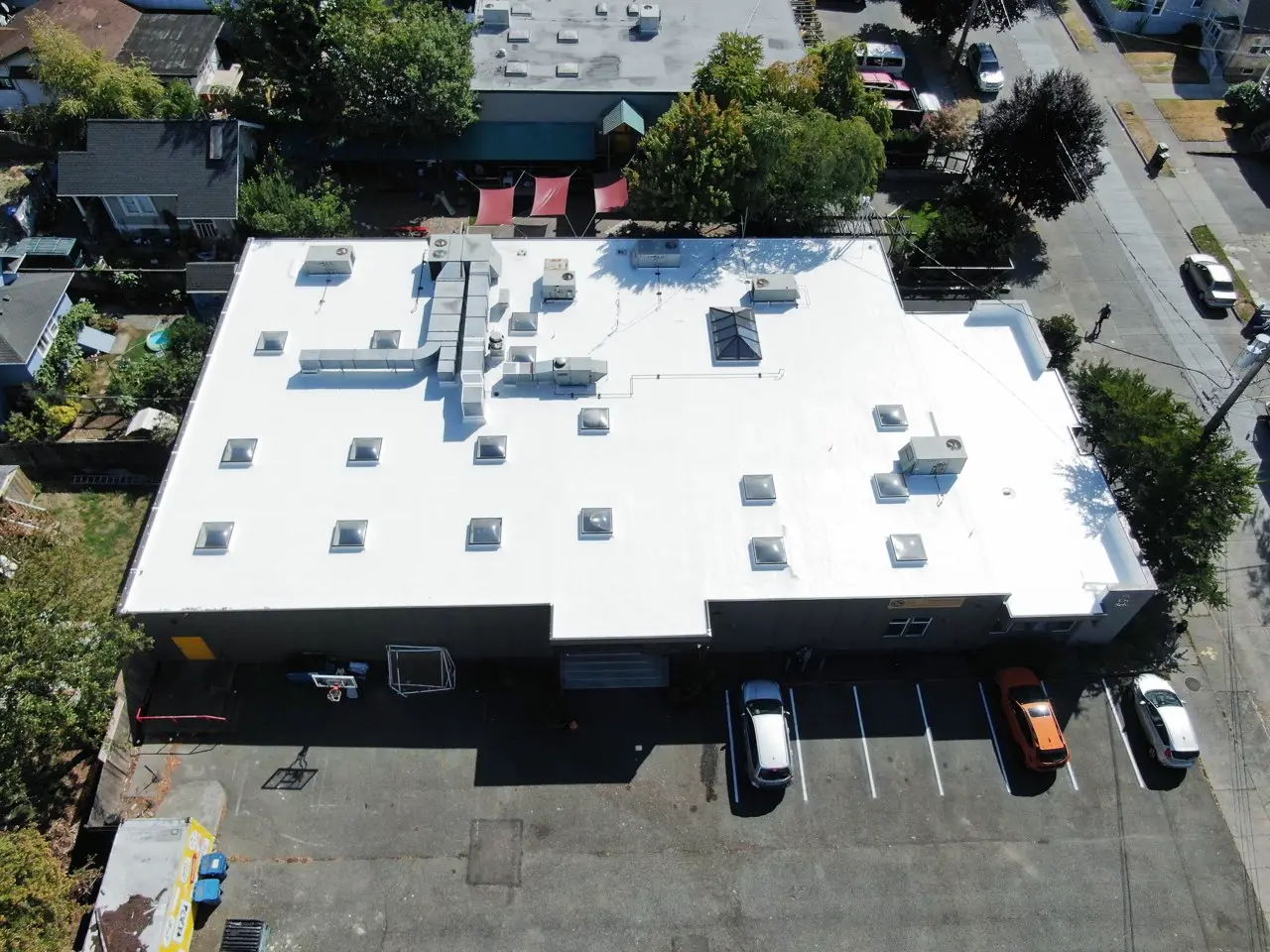
Acrylic and Silicone Roof Coatings for commercial buildings across Dayton, Montgomery County, Kettering, Beavercreek, Fairborn, Huber Heights, Vandalia, Miamisburg, Centerville, Springboro, Troy, Xenia, and the Miami Valley.
Dayton City Schools serves more than 13,000 students across a portfolio of urban school buildings that reflect the city's architectural history and the economic challenges that have shaped urban public education in the Midwest. Alongside neighboring Kettering City Schools, Centerville City Schools, and the Dayton-area parochial school network administered through the Archdiocese of Cincinnati, the greater Dayton K-12 roofing market represents a significant and consistent demand for institutional-grade commercial roofing expertise applied to the specific operational requirements of school facilities.
Ohio's roofing climate creates challenges that school districts in Dayton manage every year. The freeze-thaw cycle that characterizes Southwest Ohio winters is one of the most punishing forces acting on commercial flat roofs, and school buildings — which tend to have large, low-slope roof areas with interior drainage systems — are particularly vulnerable to the consequences of drainage system failure. A single clogged interior drain on a Dayton school building can create a ponded water condition that freezes in November, putting 50 to 100 pounds of ice load on a roof section designed for a fraction of that sustained weight, and the structural and membrane consequences of that loading can be severe.
Summer scheduling is the universal standard for Dayton area school roofing, and the Ohio school calendar creates a working window that runs from approximately June 15 to mid-August. The Miami Valley's unpredictable early summer weather — including the tornado risk that runs from April through June — means that projects scheduled to begin in early June should carry weather contingency in their schedules. By late June, the weather pattern is typically more stable and the construction season is genuinely productive. The key scheduling complication in Dayton is that summer school, Title I enrichment programs, and athletics use many district buildings through July, requiring contractors to coordinate building access carefully rather than assuming all buildings are empty.
Large institutional roof areas define the character of Dayton public school projects. A typical Dayton high school may have 150,000 to 200,000 square feet of roof area across multiple connected building sections, each with its own drainage configuration, equipment penetration density, and system age. Dayton City Schools has invested through Ohio School Facilities Commission programs in building renovation and replacement over the past two decades, and many of the district's newer buildings carry systems that are approaching the end of their warranty periods — making condition assessment and replacement planning a current and active conversation in the district's facilities office.
Ohio School Facilities Commission involvement is a significant factor in how Dayton-area school districts fund and procure major capital projects. The OSFC's co-funding model requires districts to contribute a local share of capital project costs based on the district's property wealth, with the state funding the balance. This co-funding relationship comes with OSFC design standards, approved material lists, and project management oversight that influence specification decisions throughout the roofing design process. Contractors who have completed OSFC-funded school projects in the Southwest Ohio market understand these requirements and the documentation they entail.
Prevailing wage requirements apply to Ohio public school construction under the Ohio Revised Code Section 4115. All workers on Dayton City Schools roofing projects must be paid at least the Ohio prevailing wage rates established for Montgomery County, and certified payroll records demonstrating compliance must be submitted to the district's project manager. Ohio's prevailing wage enforcement history is active — the Ohio Department of Commerce has investigated and penalized school construction contractors for non-compliance — and contractors who serve the Dayton public school market without robust prevailing wage compliance programs create significant legal and financial risk for themselves and for the district.
Safety protocols on Dayton school roofing projects must address the specific risks of construction in an occupied urban campus environment. While schools are largely empty during summer construction, custodial staff, administrative personnel, summer school teachers, and athletics coaches access buildings throughout the summer construction period. Contractors must maintain clear separation between construction zones and any occupied building areas, control debris and dust that could migrate into HVAC systems, and manage delivery and waste removal logistics that do not interfere with building operations. Dayton City Schools project managers conduct regular site safety inspections and have authority to stop work for safety violations.
Energy performance is a genuine financial priority for Dayton City Schools and its neighboring districts. Ohio's cold winters and hot summers both create significant HVAC operating costs, and roof insulation quality directly affects both heating and cooling expenses. Older Dayton school buildings may have compressed or deteriorated insulation that no longer provides its rated R-value — a condition that infrared thermography and core sampling can document accurately. Replacing that insulation as part of a roofing system replacement, and specifying current code-minimum or better insulation levels, can reduce annual energy costs meaningfully in buildings that have been under-insulated for decades.
Dayton's local roofing contractor community has evolved significantly over the past generation as suburban school districts and urban districts alike have invested in facility improvements. The market supports several regional contractors with genuine institutional school experience alongside a larger pool of contractors who do residential and light commercial work but lack the organizational capacity and insurance coverage required for public school institutional work. Districts that prioritize contractor qualification over price alone — evaluating safety records, comparable project references, and financial stability alongside bid pricing — consistently achieve better project outcomes than those that default to the lowest bidder without qualification screening.
What to send before the roof walk
Send the roof address, leak photos, roof age if known, access instructions, tenant limits, prior reports, and the deadline driving the decision. That lets the first visit focus on the roof condition instead of chasing basic context.
Questions Owners Ask
Can this work happen while the building is occupied?
Often yes. The scope should cover access, safety, dry-in, staging, noise, interior protection, and the times when tenants or operations cannot be interrupted.
What changes the cost most?
Wet insulation, deck condition, edge metal, layer count, access, roof size, code triggers, weather timing, and the amount of repeated damage usually move the cost.
How is the condition documented?
The roof file should include photos, locations, material notes, observed defects, temporary repairs, remaining deficiencies, and recommended next steps.